
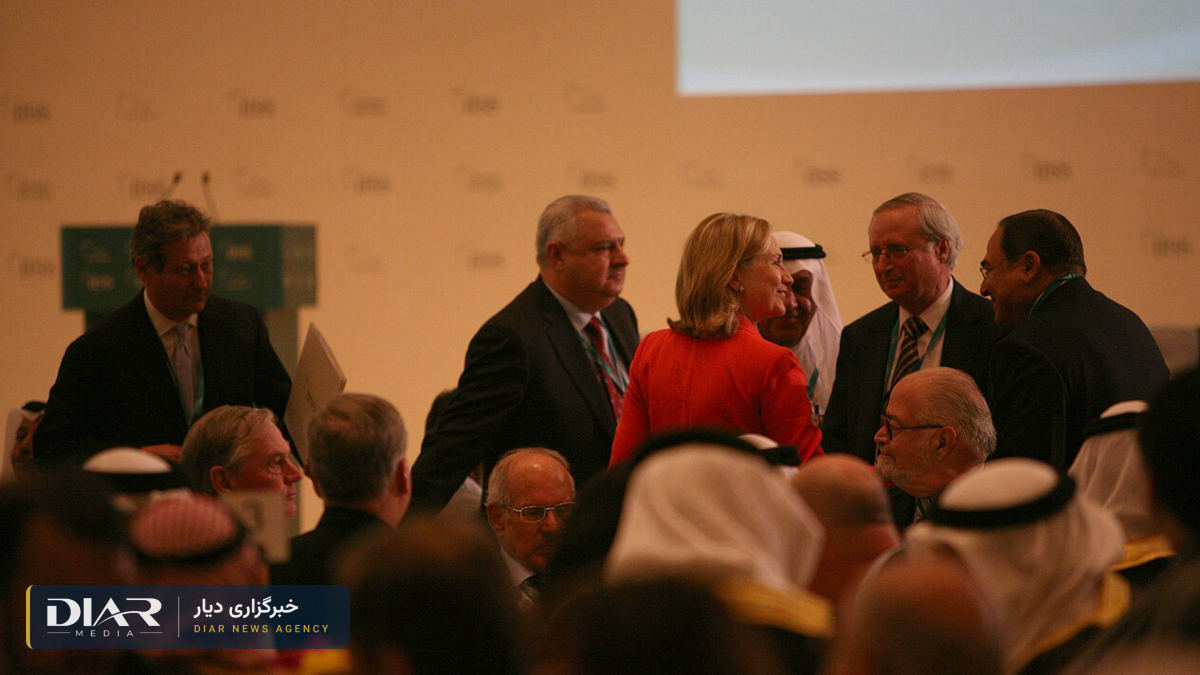
Officials from Arab states and Britain at the 22nd Manama Dialogue security summit in Bahrain condemned the attacks by the Islamic Republic and its proxy groups on countries in the region. The summit opened on Friday, 30 October, and continued on Saturday, 31 October, as Qatari mediators held talks in Doha and the likelihood of a new US strike after the congressional elections grew.
Salman bin Hamad Al Khalifa, Bahrain's crown prince and prime minister, said at the opening that freedom of navigation in the Strait of Hormuz and the Bab el-Mandeb is essential for the security and prosperity of the region and the world. Jasem Mohamed Albudaiwi, secretary general of the Gulf Cooperation Council, called the Islamic Republic's attacks on member states since the start of the war a turning point, saying these countries were not party to the war but were targeted anyway. He called for faster military integration, a missile early-warning system and implementation of UN Security Council Resolution 2817, and said the door to dialogue with Tehran remains open.
Warnings of a second round of war
Egyptian Foreign Minister Badr Abdelatty warned that a second round of war could be more dangerous and destructive and might not produce a decisive result. He called for serious negotiations on missiles, drones and nuclear proliferation. Waleed Elkhereiji, Saudi Arabia's deputy foreign minister, described the recent visit to Tehran by Saudi Defence Minister Khalid bin Salman as part of an effort to reduce tensions and support the mediation of Qatar and Pakistan, and condemned the latest Houthi attacks on Saudi Arabia.
Stephen Doughty, Britain's minister of state for the Middle East, said London would not stand by in the face of attacks on civilians, infrastructure and merchant ships. He called the Islamic Republic and its proxies a serious threat and said Britain opposes the Islamic Republic obtaining nuclear weapons. According to him, the Royal Air Force has flown defensive missions over Qatar, Bahrain, Jordan and the UAE and has supplied air defence equipment to Bahrain and Kuwait.
Lebanon, Yemen and Syria
Lebanese Foreign Minister Youssef Rajji declared solidarity with the Gulf states against the attacks of the Islamic Republic and its affiliated groups, saying no country has the right to use armed groups outside the legal structure of the state. The foreign minister of Yemen's internationally recognised government, citing a report by UN experts, accused the Islamic Republic of supplying the Houthis with weapons, money and technical support. Syrian Foreign Minister Asaad al-Shaibani condemned the missile and drone attacks on Arab countries and said Damascus is considering joining the Mecca defence pact between Saudi Arabia, Turkey and Pakistan.
At the Manama Dialogue, Arab states and Britain named the Islamic Republic and its proxies as the main threat to regional security.
Comments
No comments yet. Be the first.