
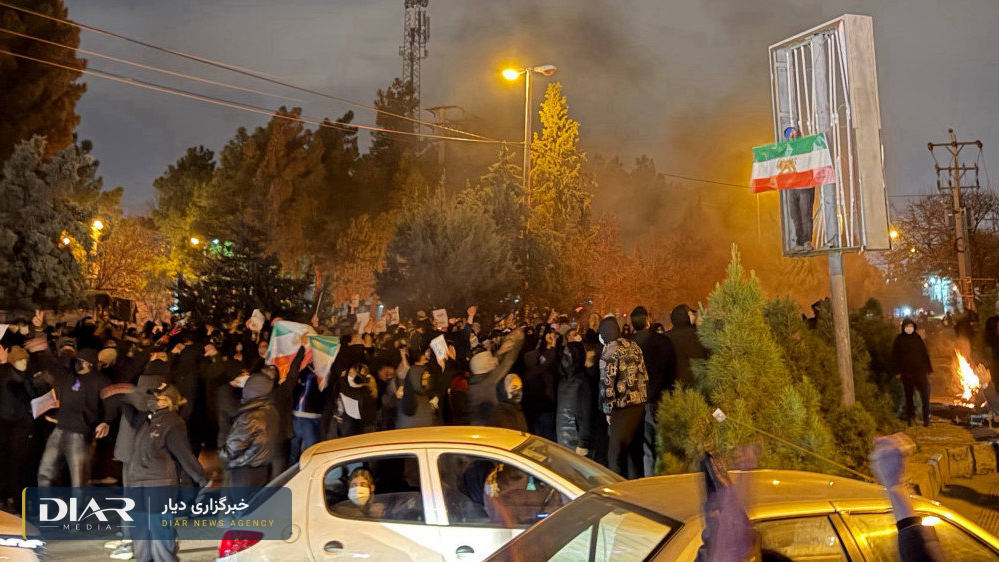
The intelligence organisation of FARAJA, the Islamic Republic's police, used a network of armed informants in at least 24 of the 37 counties of Fars province to crush the Dey 1404 uprising (January 2026). The account was given to Iran International by a former police officer who was dismissed after the 2022 uprising and is still in contact with his former colleagues. It comes from a single source and witnesses and has not yet been independently confirmed.
According to this source, a man known as "Hadi" in the police intelligence organisation was in charge of recruiting and running the informants. The network had two groups: people tied to the regime, including employees, Basij members and office managers; and people with records of thuggery or of selling drugs and alcohol, who after arrest were drawn into cooperation with promises of lighter sentences or of being left to carry on their business.
Two-man teams with pistols and machetes
The informants worked in two-man motorcycle teams: the rider with a pistol and the passenger with a machete. According to the source, they were given black masks, motorcycles and credit cards worth two million tomans for shopping at Etka stores. In Shiraz they were based and trained at a police-owned restaurant near the Quran Gate and at a complex on Ahmadi-Now Street.
The counties named, from Shiraz and Marvdasht to Jahrom, Kazerun, Lamerd and Larestan, are home to more than 80 percent of the population of Fars.
Witness accounts of the nights of 8 and 9 January
According to witnesses, in Shiraz shots were fired at protesters from around the governor's office, Setad Square and from the roof of a building, and plainclothes groups armed with machetes handed protesters over to the security forces. More than 100 people with eye injuries from pellets reached Khalili and Namazi hospitals in Shiraz, among them children aged 7, 10 and 13.
In Lamerd the entrances to the town were closed on the second night and about 150 people, many of them aluminium workers, were arrested in night raids on homes and dormitories. In Jahrom an ambulance that had come to collect a wounded person was shot at, and in Sarvestan doctors were also arrested. In Marvdasht motorcyclists identified protesters and reported them to the IRGC and the Basij, and in Kuh-Chenar forces fired from the roof of the traffic police building into Sasaniabad alley.
The account was published at the same time as the report of the UN fact-finding mission, which says at least 221 children were killed in the Dey uprising.
According to a former police officer, the police in Fars unleashed informants drawn from thugs and Basij members, armed with pistols and machetes, on the Dey protesters.
Comments
No comments yet. Be the first.