
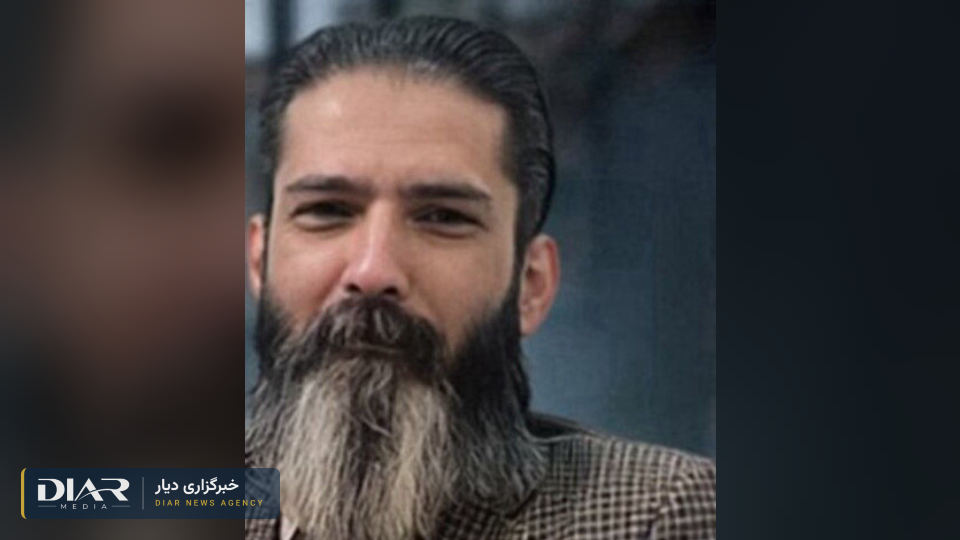
The case of Amirsalar Davoudi, a lawyer who represented Alireza Sepahi, a protester of the January (Dey) uprising who was executed, has been moved from Branch 18 to Branch 11 of the investigating magistrates at the Isfahan Revolutionary Prosecutor's Office. Branch 11 is headed by Mohammad Faridanizadeh, the same investigating magistrate whom Davoudi and his colleague Shahrzad Shahbazi had earlier accused of torturing and sexually abusing their clients.
According to informed sources who spoke to Radio Farda, the investigation into that very complaint has also been assigned to Faridanizadeh himself. One of the sources said that the person who was the subject of the complaint, and the accused in that case, is now the magistrate handling the complainant's case. Faridanizadeh previously headed Branch 15 and was in charge of the cases of people detained during the January uprising in Isfahan; DIAR reported earlier that the torture complaint of Taraneh and Romina Rahimi was also handed to the same magistrate.
Arrested at the Isfahan Revolutionary Court
Intelligence Ministry agents arrested Amirsalar Davoudi on the morning of Sunday 11 October 2026 at the Isfahan Revolutionary Court, while he was following up the case of another client. He has now been held for more than three weeks. His lawyer, Mehdi Karimi Farsi, has gone to the prosecutor's office several times without getting an answer. According to one source, he was told that Davoudi had appealed against his detention order and that the case had therefore not gone to court, even though the law requires such an appeal to be heard within three days.
Asadollah Jafari, head of the judiciary in Isfahan province, said two days after the arrest that it was over the release of an audio recording of the marriage ceremony of Alireza Sepahi and his fiancée. He said Davoudi had been formally notified of the charges of “spreading falsehoods online with intent to disturb public opinion”, “inciting people to kill one another with intent to disrupt national security” and “propaganda against the system”. People close to Davoudi deny the claim that he sent the recording to media outside the country and say he only posted it on his own Instagram page.
The case of Alireza Sepahi
Alireza Sepahi was one of the defendants in the case over the deaths of four special police unit officers in Alikhani Square in Isfahan during the protests of 8 January 2026, and was sentenced to death. On 28 July 2026 he was moved to solitary confinement, but hours before the sentence was to be carried out he suffered a heart attack and his execution was postponed. Davoudi and Shahbazi then took on his case and filed for a retrial. According to the lawyers, location data from Sepahi's mobile phone and footage of him and his mother in a shop showed he was on Mofatteh Street at the time of the incident, not in Alikhani Square. The Supreme Court allowed a retrial, but Branch 2 of the Isfahan Revolutionary Court rejected the request in under 48 hours without holding a hearing.
Sepahi married Mahshad Kashani on 4 October 2026; Davoudi performed the ceremony and announced it on Instagram. The next day, 5 October, the authorities executed him in Isfahan prison. Davoudi called the execution unjust and challenged Gholamhossein Mohseni-Ejei, the head of the judiciary, to a live, uncensored debate. A few days later he was arrested.
In the Alikhani Square case, 59 people have been arrested and 14 sentenced to death, and seven of those sentences have been carried out. Somayeh Afshar, Alireza Sepahi's mother, has also been sentenced to five years in prison.
The lawyer who had accused the magistrate of torture is now the defendant in a case that the same magistrate is handling.
Comments
No comments yet. Be the first.