
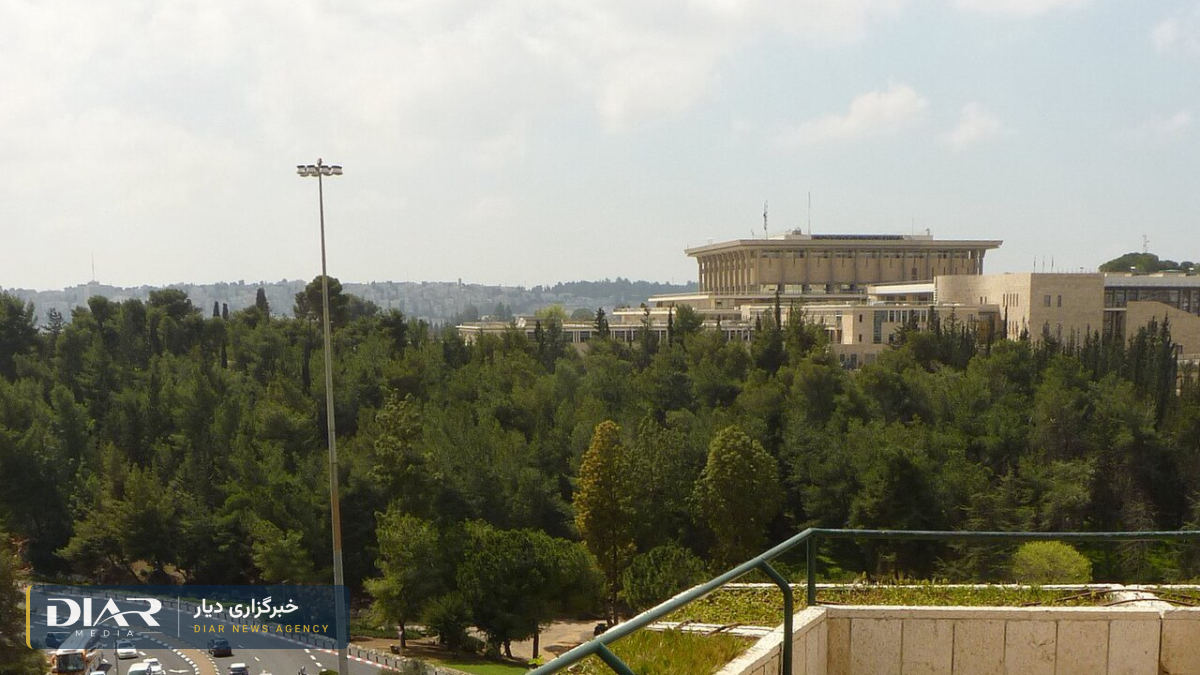
For four decades the Islamic Republic claimed it would decide Israel's fate. As the votes of Israel's parliamentary election are counted, the picture has turned upside down: the regime's officials and media follow the Knesset count minute by minute, because the future of the war with the United States and Israel, and with it the future of the regime itself, depends to a large extent on the coalition taking shape in Jerusalem.
From promises of destruction to watching the ballot box
In September 2015 Ali Khamenei said Israel would not see the next 25 years. The line was repeated for years on posters and from Friday prayer pulpits and was the backbone of the Islamic Republic's regional propaganda: a regime that presented itself as the decisive power in the region and set an expiry date for its enemy.
Today the same regime finds that its main question is who will form a government in Israel. With 85.6 percent of the vote counted by noon on Wednesday 28 October, Benjamin Netanyahu's bloc has 53 seats and his opponents 48, and neither has reached the 61-seat majority. DIAR has reported the count from the exit polls to the count of 72 percent of ballot boxes. Netanyahu said in recent days that the Islamic Republic is weaker than ever and that, together with Donald Trump, he has a chance to remove its threat for good.
Reactions that reveal anxiety
The regime's media have written about Israel's election one after another in recent days. Zeinab Soleimani, Qasem Soleimani's daughter, claimed in a message published by the Islamic Republic's judiciary that the result of this election has no effect on "the will of the Iranian nation". The government's official news agency also quoted an analyst close to the regime as saying that Netanyahu wanted to become a "legend" and that the war with Iran stopped him.
The two narratives do not fit together. If the result of Israel's election does not matter, there is no reason for so much commentary and prediction. And if the war with the Islamic Republic weakened Netanyahu, one has to ask why he still leads the largest party in the Knesset and why his bloc is ahead of its rivals. In the assessment of DIAR's analysts, the constant repetition that "the result does not matter" is itself a sign that the result matters a great deal to the regime.
Why the Knesset has become decisive for Tehran
The reason for this anxiety is clear. Under the US naval blockade the Islamic Republic has no oil to sell, Iran's economy is in deep recession, and Donald Trump called the ceasefire with the regime a waste of time at a rally in Mississippi. Reports speak of US preparations for a new operation after the congressional midterm elections. In such a situation, whether Israel's next government coordinates with Washington to keep up the pressure has become one of the variables of the regime's survival.
For a regime whose slogan was "deciding the fate of the region", this means it has lost the initiative. The decisive choices about its future are being made in Washington and Jerusalem, and Tehran is only a spectator. At the same time, the Tehran meeting with delegations from Saudi Arabia, Pakistan and Turkey showed that the regime is looking to mediators to prevent a new round of war.
The message for Iranians
For Iranians this contradiction has one clear conclusion: a regime that has tied its fate to the votes of another country's citizens has no say in deciding Iran's future. Iran's future must be decided by Iranians, not by Knesset elections nor by the calculations of the IRGC. This week Prince Reza Pahlavi, in a video message, called on all Iranians to join the national cooperation campaign to save Iran and asked military and state personnel to join the people.
The final count of Israel's votes, including some 600,000 "double-envelope" ballots, will be completed in the coming days, and Israeli President Isaac Herzog will begin consultations with the parties to name the person tasked with forming a government once he receives the official results.
A regime that set an expiry date for Israel now looks for its own future in the Knesset vote count.
Comments
No comments yet. Be the first.