
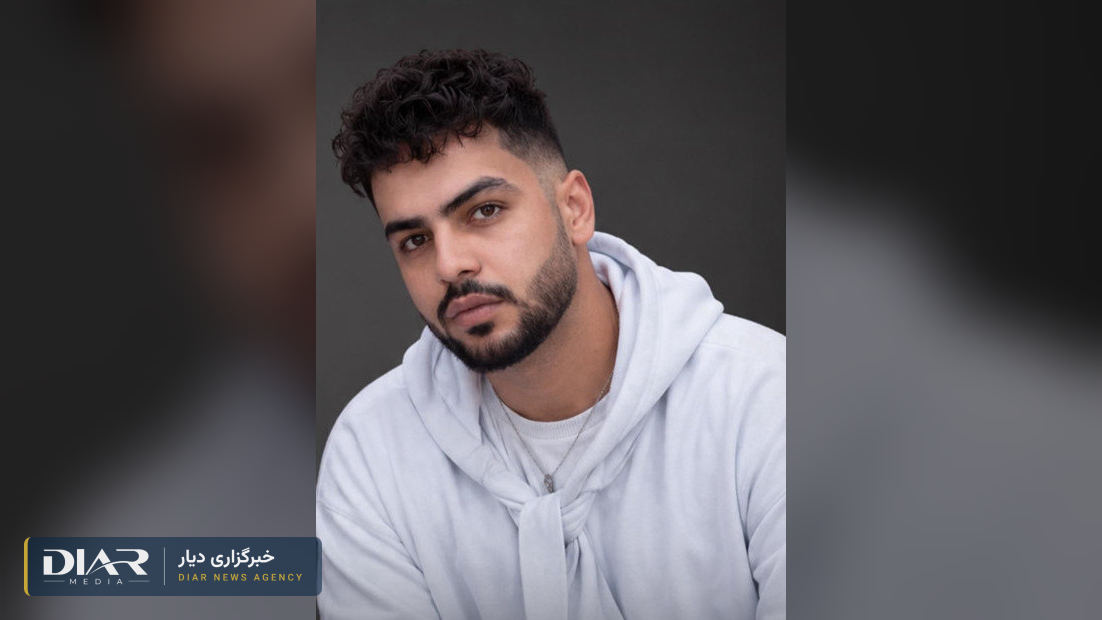
Five knives from the poultry shop where Alireza Raisi worked were used in the Revolutionary Court as evidence for the charge of "moharebeh" (waging war against God) against him. A source close to the family of the young Dey uprising protester from Isfahan said so on Monday, 26 October 2026, in an interview with Iran International. Alireza Raisi was executed on 5 October in Isfahan's Dastgerd prison.
According to the source, the everyday tools of his job in the shop, the knives every poultry shop needs for its work, were turned into weapons in the case file. Videos of Alireza at the same shop have also been released. Alireza Raisi was born in 2004/2005 and was about 21 at the time of his execution; Iran Human Rights had also given his age as 21.
Arrested a day after his cousin's funeral
Intelligence Ministry agents arrested Alireza Raisi on 19 January 2026, one day after his cousin's funeral, at the entrance of Isfahan's Bagh-e Rezvan cemetery. His cousin, 28-year-old Ramin Raisi, was killed by the security forces' gunfire during the Dey uprising; according to the family, he was hit by four bullets in the chest.
Even after the execution, the Islamic Republic did not allow the family to bury him near his home. Alireza's body was buried in the desert near Anarak, close to the village of Oshin, and the family was able to visit his grave only about two weeks after the execution.
The Alikhani Square case
Alireza Raisi was one of 12 defendants sentenced to death in the so-called "Alikhani Square" case in Isfahan. The authorities have accused them of the deaths of four officers in clashes in the square on 8 January 2026. He was executed at dawn on 5 October together with Alireza Sepahi, another defendant in the same case, bringing the number of people executed in this case to seven. Before them, Gol-Mohammad Mohammadi, Erfan Esfandiari, Abolfazl Sepahi, Amirhossein Safari and Ghaem Hosseini had been executed.
Mai Sato, the UN special rapporteur on Iran, had expressed serious concern about torture and violations of fair-trial standards in this case. The office of Prince Reza Pahlavi had also urged governments and human rights bodies to act to stop the executions before they were carried out.
These new details reveal a familiar pattern also seen in the cases of other Isfahan protesters, including the case of Ilia Benrashid in Shahinshahr: cases fabricated by the security apparatus and courts in which the defendant is denied the right to a defence.
The everyday work knives of a young poultry seller became evidence of "moharebeh" and his death sentence in an Islamic Republic court.
Comments
No comments yet. Be the first.