
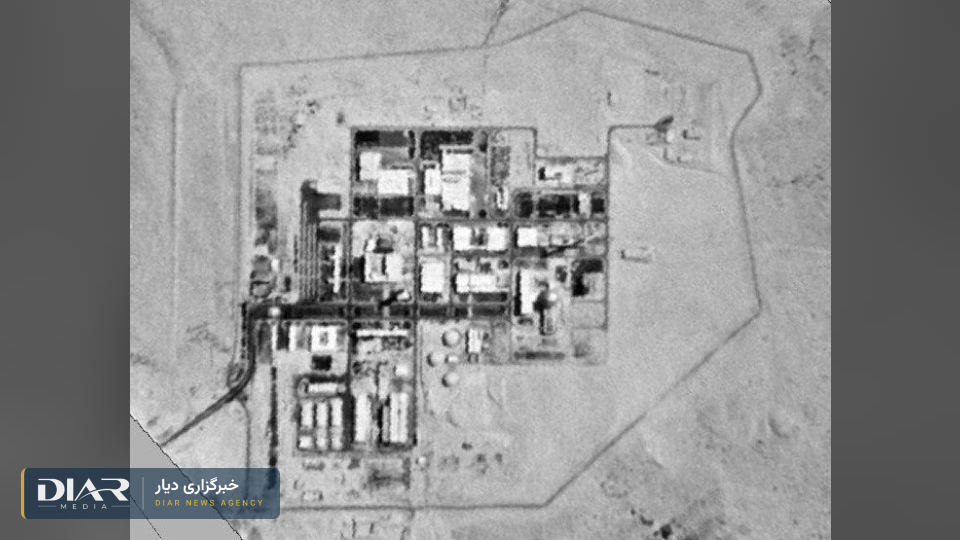
The Islamic Republic openly threatened on Friday, 23 October 2026, to target the Dimona nuclear site in the Negev desert if the United States or Israel resume their strikes. Media linked to the office of Mojtaba Khamenei, the Islamic Republic's leader, published an image of the Dimona reactor bearing a caption about new fronts opening and a "soon" stamp.
Tasnim news agency, affiliated with the Islamic Revolutionary Guard Corps (IRGC), republished the propaganda package citing the office of the Islamic Republic's leader and presented it as the unveiling of a new target against Israel. Neither Israel nor the United States had officially responded to the threat by the end of Friday.
A parallel threat against the Persian Gulf states
The threat was published on the same day that the Islamic Republic warned the Persian Gulf states through intermediaries that, in the event of a new attack, it would strike their airports, oil and gas pipelines and telecommunications infrastructure, and step up attacks on American forces, including attempts to sink warships. DIAR had earlier reported the details of the Islamic Republic's threat to Persian Gulf airports and pipelines.
At the same time, reports indicate that the American and Israeli militaries are preparing for a new round of strikes. The aircraft carrier Theodore Roosevelt and the 13th Marine Expeditionary Unit are heading to the region, and plans for new strikes after the US midterm elections have been drawn up. Israel also holds parliamentary elections on Tuesday, 27 October.
Background: the March missile attack on Dimona
The Dimona threat is not unprecedented. In March 2026, a few days after the American and Israeli strikes began, the Islamic Republic's military officials said they would hit Dimona if the goal of overthrowing the regime was pursued. On 21 March 2026, the Islamic Republic's ballistic missiles struck the towns of Dimona and Arad near the site, injuring at least 180 people; Israeli air defences failed to intercept at least two missiles.
An attack on a nuclear reactor, especially in an area where civilians live, risks radiation leaks and a humanitarian disaster. An open threat of such an attack shows that a regime which has abandoned the people of Iran to blockade, inflation and unemployment is ready to drag the country into a bigger and more dangerous war to survive.
For the second time this year, the Islamic Republic has openly threatened the Dimona nuclear facility.
Comments
No comments yet. Be the first.