
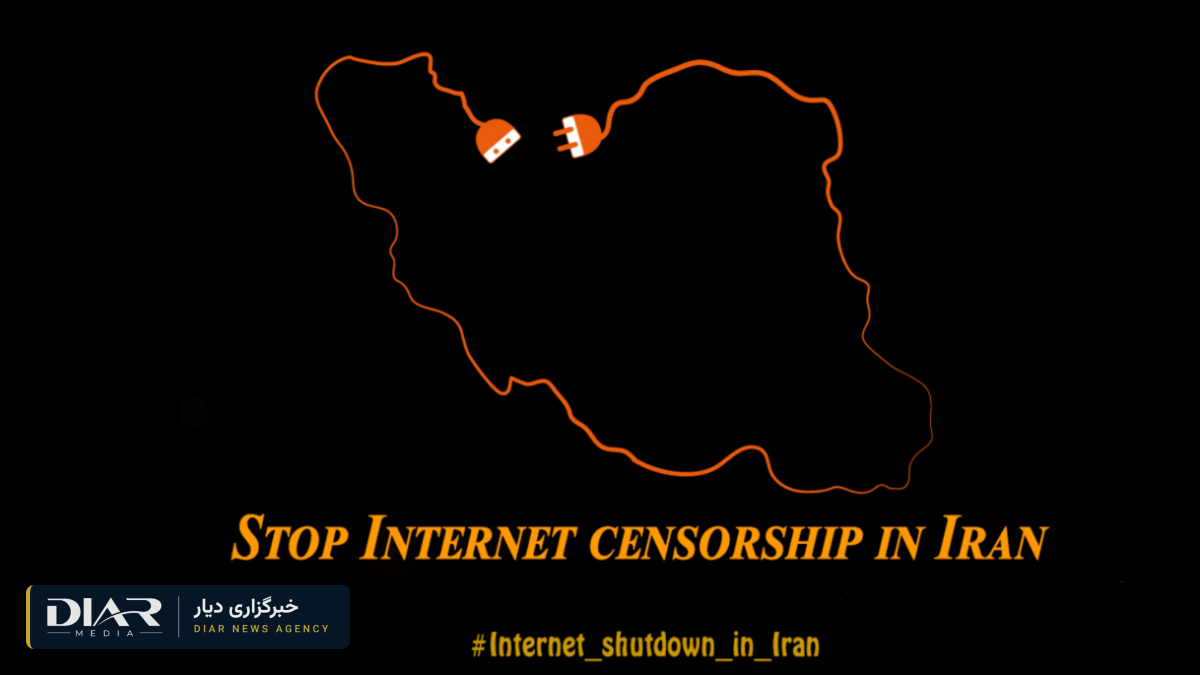
In its annual Freedom on the Net 2026 report, published on Thursday 22 October 2026, Freedom House lowered Iran's score from 13 to 9 out of 100. It is the largest decline among the 38 countries assessed and places Iran alongside China and Myanmar at the bottom of the global internet freedom ranking.
According to Freedom House, after the war began in February–March 2026 the Islamic Republic cut off internet access for most people in Iran for about 88 days: the longest nationwide shutdown in the 16 years the organisation has published its internet freedom report, and the longest in Iran's history. Restrictions were partly lifted from late May 2026, but most citizens can still reach only a limited number of websites. The report covers the period from June 2025 to the end of May 2026.
Internet shutdown during the Dey uprising
Freedom House recalls that during the crackdown on the Dey uprising of January 2026 the Islamic Republic almost completely cut nationwide communications for about 20 days. According to the report, more than 50,000 protesters were arrested, some of them solely for posting critical content or supporting the protesters on social media. Iran Human Rights has recorded at least 4,200 people killed, including at least 420 women and 281 teenagers and children under 18, and considers this a minimum figure; the Islamic Republic had put the death toll at 3,117.
A two-tier internet and expensive VPNs
According to the report, the Islamic Republic has rebuilt internet access in such a way that most Iranians are confined to a domestic version of the internet, while only a privileged group can reach global services. The so-called "Internet Pro" packages needed to reach less filtered content became unaffordable for most people amid severe inflation, and VPNs and satellite access are also very expensive. Iran's score fell to 5 out of 25 for "obstacles to access", 3 out of 35 for "limits on content" and 1 out of 40 for "violations of user rights".
Kian Vesteinsson, senior research manager and author of the report, said authoritarian governments turn the internet into a tool for controlling citizens, deciding who gets connected and what they see. Freedom House has called on democratic governments to expand censorship circumvention tools and emergency satellite internet access, and to fund the US Open Technology Fund.
A score of 9 out of 100 places Iran alongside China and Myanmar among the world's most repressive internet environments.
Comments
No comments yet. Be the first.