
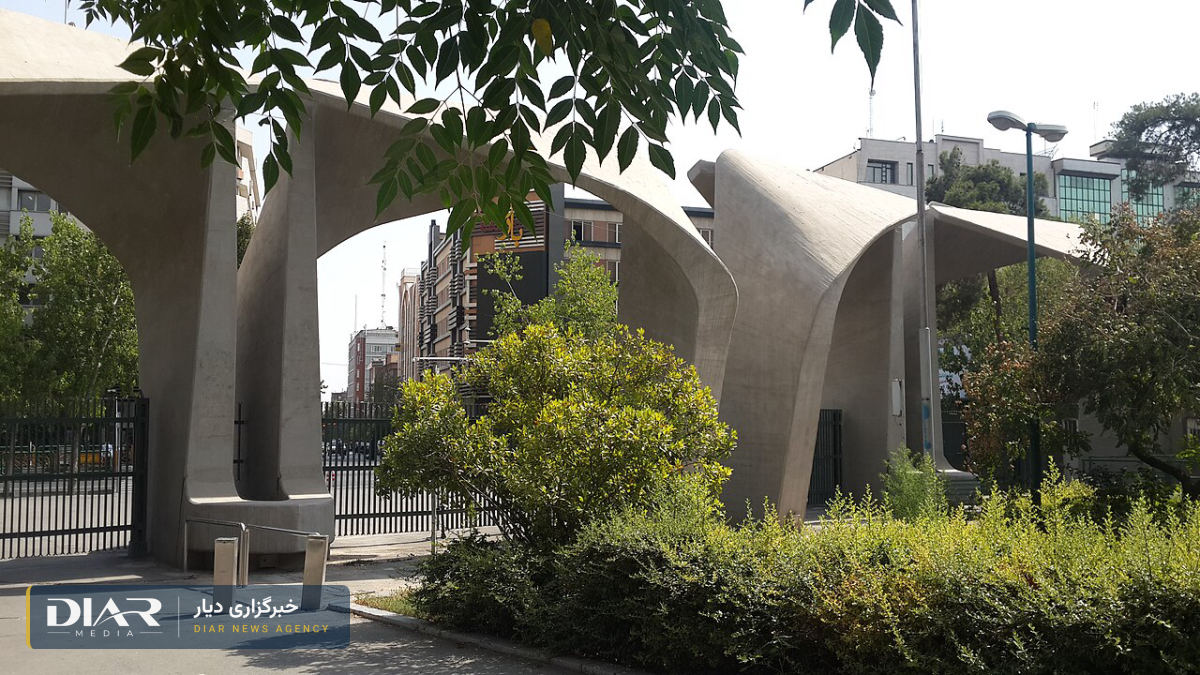
The University of Tehran's security office has stepped up summonses of students over the past two weeks, citing what it calls "the tense situation at the university", while at least six universities in Tehran have intensified compulsory hijab pressure on female students. The reports were published on Wednesday 21 October 2026 by student news sources and the Dadban legal support centre.
According to these sources, a person from the Intelligence Ministry was present at some of the summons sessions at the University of Tehran and, by bringing up private information and details of students' personal lives, put them under psychological pressure to deter them from any possible protest. Students say they faced a mix of promises, humiliation and threats in these sessions. The president of the University of Tehran has also set up a special working group to enforce compulsory hijab.
Hijab patrols at Tehran universities
Dadban said that since the start of the new academic year, female students at at least six Tehran universities have faced repeated hijab warnings, insulting behaviour by security officers and interference in their dress and personal lives:
- On the University of Tehran's central campus, a "hijab patrol" on motorcycles monitors students' dress.
- At Kharazmi and Shahid Beheshti universities, security officers patrol the grounds on motorcycles and confiscate students' ID cards.
- At Allameh Tabataba'i University, security has hired new staff and tightened monitoring of dress.
- At Sharif University, students have in some cases been barred from entering the university.
- At Iran University of Science and Technology, the strictness has extended to the style of coats, and professors have been asked to cooperate in enforcing compulsory hijab and gender segregation.
Students' reaction and legal implications
A group of students condemned the security office's interference in dress in a statement and stressed "resistance to compulsory hijab". Dadban also noted that barring female students from entry or threatening them with disciplinary cases over their dress violates the right to education and amounts to gender discrimination, contrary to Article 30 of the constitution and Article 13 of the International Covenant on Economic, Social and Cultural Rights.
These pressures continue the broad crackdown on universities after the January uprising. Earlier, the University of Tehran ended its cooperation with two lecturers, Farzad Kalbali and Sepid Birashk, over their political positions.
The Islamic Republic is turning universities into barracks with summonses, threats and motorbike hijab patrols.
Comments
No comments yet. Be the first.