
The Islamic Republic is accused of fuelling the unrest in France through online influence campaigns and links to far-left groups. Disinformation researchers say Tehran and Moscow have exploited the country's school and student protests, which began about a month ago with demands for more education funding and turned violent in Paris and other cities in recent days.
According to a report published by the British newspaper The Times on Tuesday, 20 October, Emmanuel Macron, the President of France, has blocked the publication of his government's assessment of the Islamic Republic's interference. According to the report's sources, Jean-Noël Barrot, the French Foreign Minister, received a report on the Islamic Republic's disinformation campaigns and cyberattacks, including during the Paris 2024 Olympics and France's later protests, and wanted it published, but the Élysée Palace opposed this in order to keep diplomatic distance in the middle of the war with the Islamic Republic. The report stresses that there is no sign that the movement was started by foreign powers.
Infiltration of far-left groups
David Colon, a historian at Sciences Po in Paris and a disinformation researcher, said the Islamic Republic, Russia and Algeria are inflaming tensions, and that the Islamic Republic is particularly effective because it has infiltrated far-left groups. Emmanuel Razavi, a French-Iranian journalist, also claimed that the Islamic Republic's intelligence apparatus has established links with far-left groups, that the IRGC's Quds Force has set up troll farms and recruited influencers, and that its agents paid a number of unemployed young people a few hundred euros to cause disorder in Paris. According to him, these people were a small minority of those taking part in the unrest of 17 October. No evidence has been published for these claims of payments and operational links.
Radio France Culture also reported, citing French police and intelligence sources, that foreign-backed bloggers and influencers have fuelled the unrest. Jean-Noël Barrot had said last week that hostile narratives from Russia, China and the Islamic Republic have exploited the protests. Officials of the accused countries have rejected the accusations.
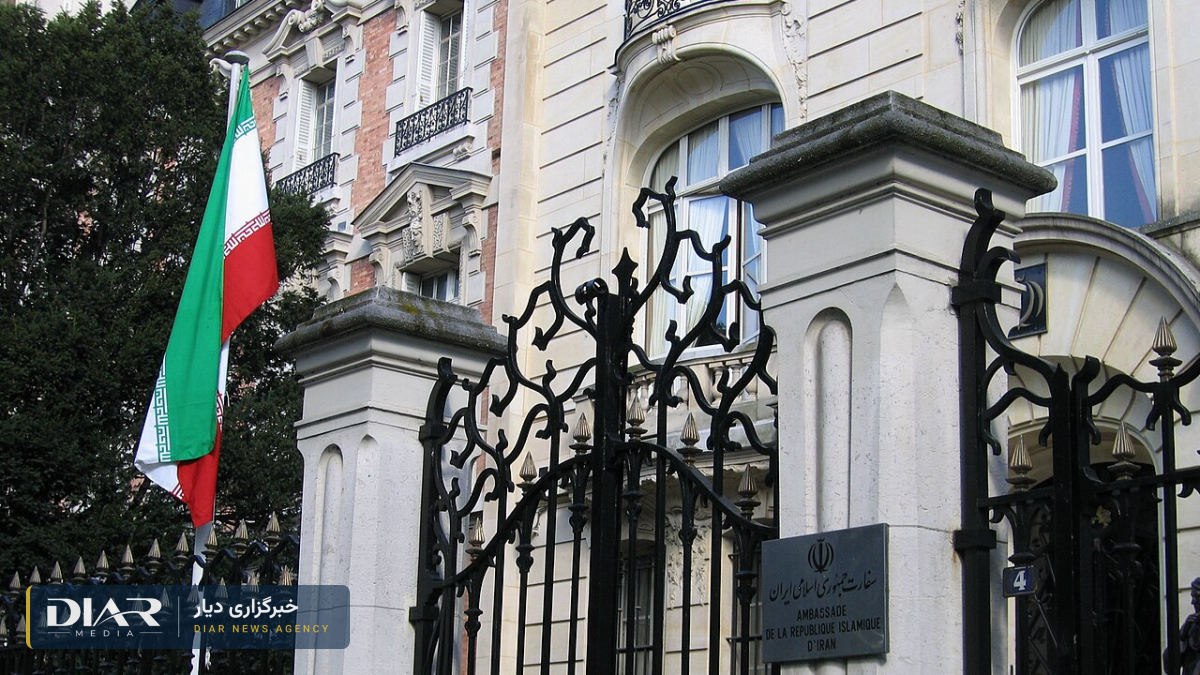
The Islamic Republic's ambassador summoned in Paris
This is not the first confrontation between Paris and Tehran over the French protests. On Wednesday, 8 October, at Jean-Noël Barrot's request, the French Foreign Ministry summoned the Islamic Republic's ambassador and called the false content published by the official accounts of the Islamic Republic's Foreign Ministry about the French school movement "absolutely unacceptable". Earlier, Abbas Araghchi had used the unrest in France to attack Emmanuel Macron; a government that itself fired on the protesters of the January uprising.
The record of the Islamic Republic's influence operations
In autumn 2024, Microsoft announced that a group called "Cotton Sandstorm", which according to the company is directed by the IRGC, had launched a campaign against Israel's participation in the Paris Olympics. OpenAI also reported on 9 October this year a campaign originating in Iran that had published nearly 100 articles in foreign media under seven fake journalist identities. A few days ago, Edi Rama, the Prime Minister of Albania, accused the Islamic Republic and Russia of inciting the unrest in Tirana.
The new accusation against the Islamic Republic in France brings back into view the familiar pattern of Tehran's links with Europe's far left to destabilise the West.
Comments
No comments yet. Be the first.