
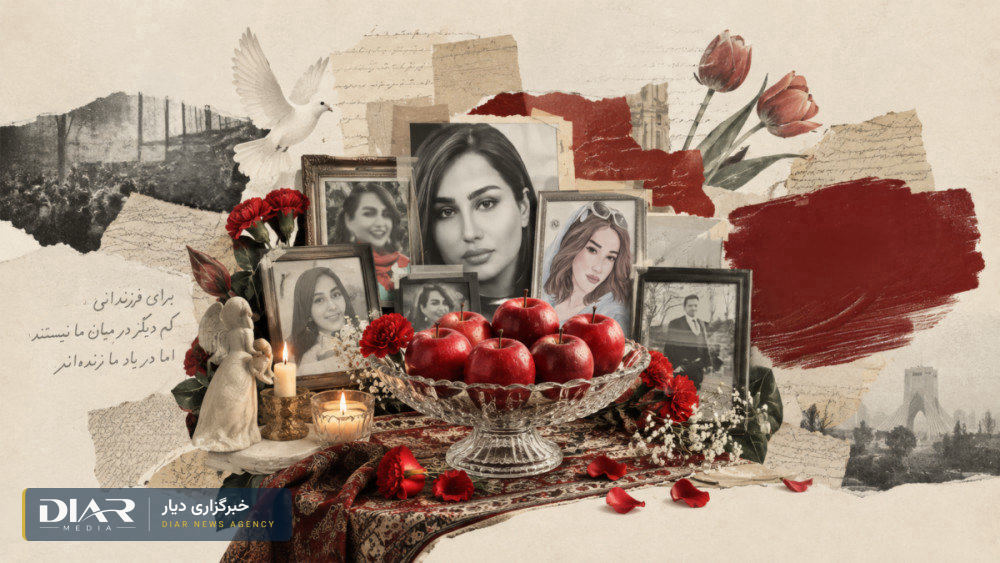
The security bodies of the Islamic Republic are forbidding the families of those killed in the January 2026 uprising, who are seeking justice, from visiting their loved ones' graves, holding memorial ceremonies, writing about the massacre, or having any contact with other families. Dadban, a legal advisory group, exposed this pressure on Tuesday, 20 October 2026, by publishing the account of one such family.
According to the family, agents have repeatedly warned them by phone and with threats not to go to the graves of the fallen, not to be in touch with other families and not to hold any ceremonies. Families who speak or write about the January massacre are threatened with summons and interrogation. The pressure is such that even the text of Instagram posts has to be written with great care to avoid legal consequences. The account also describes the arrest of a family member, blindfolded and at gunpoint, and his transfer to a place the family calls a "hole".
Building cases to silence the quest for justice
Dadban says that a large number of family members of the fallen have had judicial cases opened against them after pursuing the truth, demanding accountability or announcing the death of their loved one. In the group's assessment, the aim of the Islamic Republic is to silence the families and halt the movement seeking justice.
This pressure is not new. On 30 January 2026, the US Treasury Department sanctioned a number of Islamic Republic officials, including Hossein Zare Kamali, commander of the IRGC in Hamedan province, and stated that security forces in Hamedan had forced families to bury the fallen without ceremony and had demanded money for the release of the bodies.
After the massacre of the January uprising, the Islamic Republic now treats even the families' mourning at the graves of the fallen as a crime.
Mourning despite the threats
Despite these threats, families keep the memory of their children alive: from the birthday celebration of Alireza Sadian at his grave in Farrokhshahr to the family's discovery of Alireza Raisi's hidden grave in the Anarak desert. Mothers seeking justice are also publishing the stories of their slain children in the campaign "9 Apples, 9 Months Apart".
Comments
No comments yet. Be the first.