
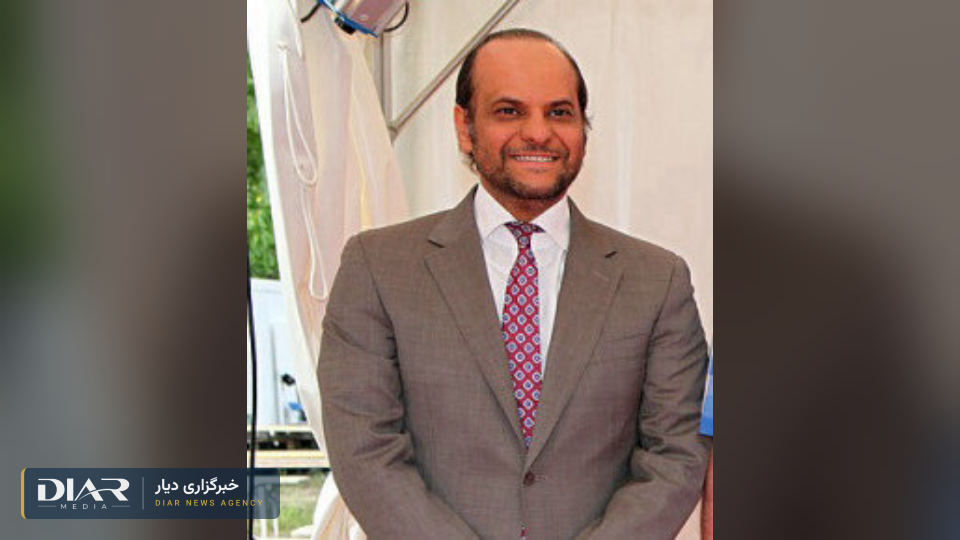
Sheikh Saud bin Abdulrahman Al Thani, Qatar's Deputy Prime Minister and Minister of State for Defence Affairs, said on Monday, 19 October 2026, at the Global Security Forum in Doha that the energy shock caused by the war with the Islamic Republic has yet to peak and that the world will see more of its consequences in the coming days and months. He named the risk of disruption to energy supplies, trade and economic growth among the most important of these consequences.
Qatar's defence minister opposed any charging of tolls for passage through the Strait of Hormuz, saying that uncertainty in this waterway, the main export route for the Persian Gulf's oil and liquefied gas, will ultimately harm consumers around the world. His remarks come as the IRGC has repeatedly claimed in recent days to have closed the strait and has made new claims about tankers hitting mines.
Ras Laffan: the wound from the Islamic Republic's attack
The Islamic Republic's attacks in the first weeks of the war on the Ras Laffan industrial complex, Qatar's largest liquefied gas production centre, destroyed part of its facilities, and rebuilding them will take several years. Asked about the attack, Sheikh Saud said Qatar was caught off guard, has learned from it and is working to protect its assets against unexpected attacks.
According to him, Qatar's three-to-four-decade defence cooperation with the United States meant that more than 90 percent of the attacks were neutralised. The Al Udeid base, host to American forces and their allies, was targeted by the Islamic Republic during the war, and in the first days of the war Qatar had announced the downing of two of the Islamic Republic's fighter jets. Qatar's defence minister also announced a new regional defence partnership prioritising air defence, countering drones and cybersecurity, without naming its partners.
Mediation alongside defensive readiness
Sheikh Saud said that despite the attacks, Qatar has not cut its contact with Tehran and supports mediation by Qatar, Pakistan and Oman to reach an agreement among the United States, the Islamic Republic and other parties, including Israel. He added that mediation does not mean Qatar will turn a blind eye to defensive action, and said a lasting agreement requires broader dialogue involving the Gulf Cooperation Council countries, Pakistan and Turkey.
This position follows the remarks of Majed Al-Ansari, spokesman for Qatar's foreign ministry, who described the Islamic Republic's attack on the Persian Gulf states as a decision taken at the highest level of the government and born of desperation. The foreign ministers of the Gulf Cooperation Council also, at the Manama meeting, held the Islamic Republic responsible for the attacks on the countries of the region and demanded compensation. Earlier, in May–June, at the Shangri-La security dialogue in Singapore, Sheikh Saud had opposed permanent tolls for passage through Hormuz.
Qatar's defence minister says the consequences of the war the Islamic Republic dragged the Persian Gulf into are still to come for the global energy market.
Comments
No comments yet. Be the first.