
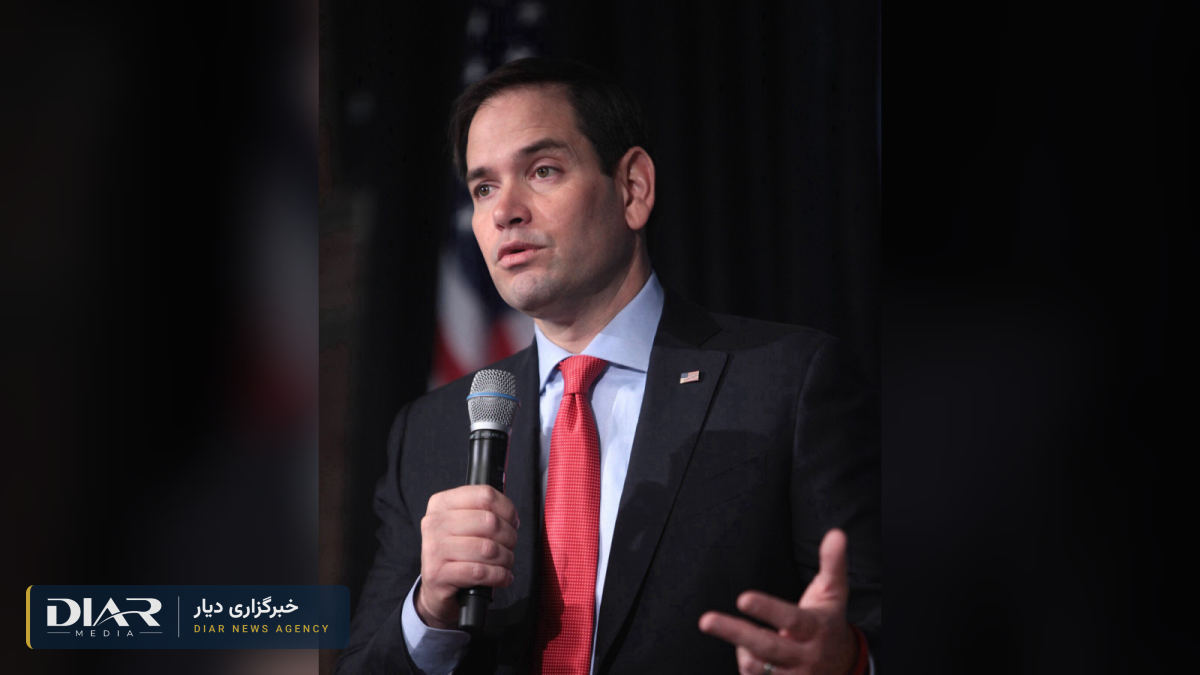
Marco Rubio, the US Secretary of State, said in an interview published on Monday 19 October 2026 that the war with the Islamic Republic is in some respects over. He added that the US is now essentially in a defensive posture in the Strait of Hormuz and, through sanctions and the naval blockade, is at the same time crippling the Islamic Republic's economy.
In the interview with the Breitbart website at the US State Department, answering a question about American public impatience for the war to end, Rubio said he understands that impatience, because everyone wants this to be over. According to him, Donald Trump has destroyed the Islamic Republic's navy and air force and its missile and drone factories; the regime still has some missiles, but can no longer build them at the former pace, and a large part of the territory under its control is highly vulnerable to possible future strikes.
The Strait of Hormuz and the naval blockade
The US Secretary of State said the Islamic Republic had held the Strait of Hormuz hostage but has now lost control of it. He acknowledged that the regime's forces still fire at ships, but said the US military, by escorting and defending vessels, has kept traffic flowing to a large extent. According to him, over the past ten days some 13 to 14 million barrels of oil a day have passed through the strait. This assessment is consistent with the earlier CENTCOM report that 97 percent of ships had passed safely through the Strait of Hormuz.
Rubio described the new sanctions as in effect a blockade and a response to the continued attacks on ships, and thanked Scott Bessent, the US Treasury Secretary, for carrying them out. He said the Islamic Republic is the only country in the world that cannot export even a single barrel of oil through the Strait of Hormuz, and that every dollar kept away from the regime is a dollar that does not reach Hezbollah, Hamas, Iraqi militias, its military forces and its nuclear programme.
Washington's two goals in the war
Rubio listed two main goals of the war: first, preventing the Islamic Republic from acquiring a nuclear weapon; according to him, the regime wanted to build a conventional shield with tens of thousands of missiles and drones and, behind it, reach the building of an atomic bomb. Second, ending the hostage-taking of the Strait of Hormuz, control of which, he said, has now slipped out of Tehran's hands.
He called the Islamic Republic and the hardline clerics ruling Tehran the main cause of instability in the region, and said Hezbollah is 100 percent an agent of Tehran and that the regime backs Iraq's Shia militias and Yemen's Houthis. According to Rubio, the Islamic Republic is the only state in the region that has attacked Saudi Arabia, the UAE, Bahrain, Kuwait and Jordan directly rather than through proxy forces. He also said America's political elites traditionally regarded the Palestinian question as the key to peace in the Middle East, but that the main obstacle to peace is the Islamic Republic.
Background
These remarks come as US embassies in the region have issued security warnings about the danger of an attack by the Islamic Republic and its allies, and Donald Trump has said Russia is not helping the Islamic Republic much. Rubio had earlier said that Washington endorses Britain's assessment of the Islamic Republic's role in the plot to attack the Fairford base.
The US Secretary of State says the Islamic Republic has lost control of the Strait of Hormuz and cannot export even a single barrel of oil through it.
Comments
No comments yet. Be the first.