
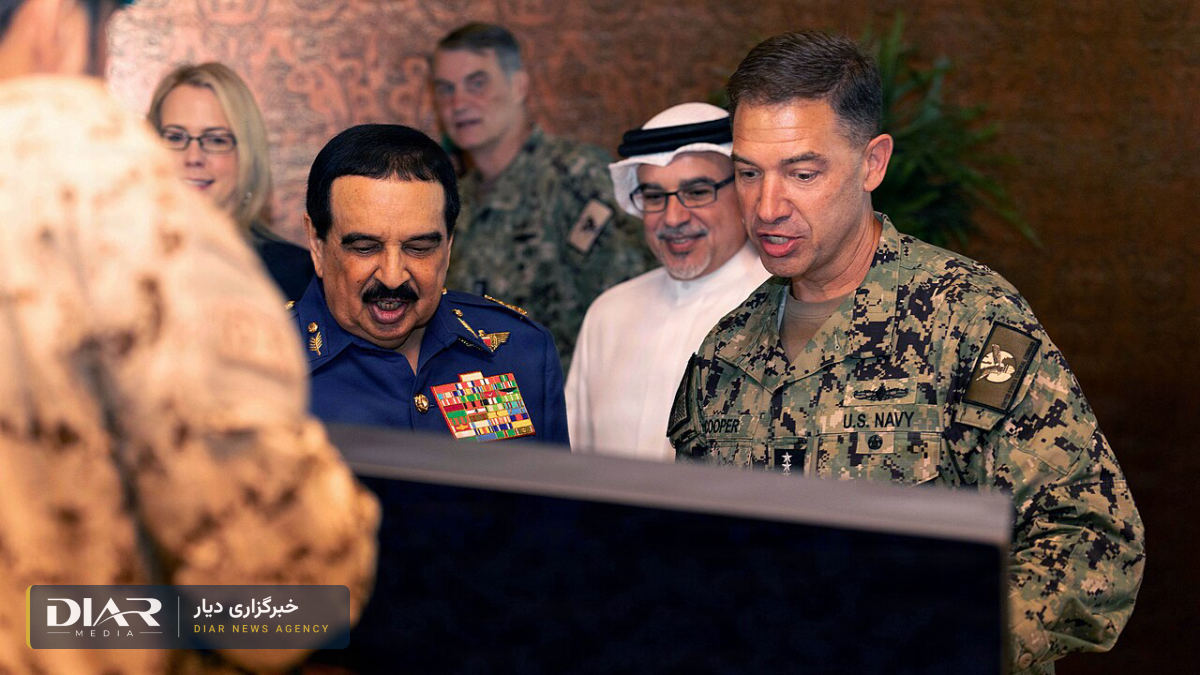
Admiral Brad Cooper, commander of US Central Command (CENTCOM), announced in a video message on Friday, 16 October 2026, that about 400 merchant ships have passed through the Strait of Hormuz in the past seven days, and that over the same period US forces helped their partners in the Persian Gulf export more than 100 million barrels of crude oil through the waterway.
According to the CENTCOM commander, this figure adds to the 1.3 billion barrels of oil that the US has helped its regional allies move through the strait in recent months. Cooper stressed that the Strait of Hormuz is under the control of the United States and its regional partners, not the Islamic Republic, and remains open to trade.
The IRGC's claim of control over the Strait of Hormuz
Cooper's remarks are a direct reply to repeated claims by the Islamic Revolutionary Guard Corps (IRGC) that it controls the strait. CENTCOM had earlier called three IRGC claims about the Strait of Hormuz and American casualties false. Since mid-February, after the war began, the Islamic Republic has disrupted passage through the waterway by attacking merchant ships; under normal conditions about a fifth of the world's oil and liquefied gas passes through it. The US also reimposed its blockade of Iran's southern ports in early July and says the blockade will remain in place for as long as the attacks on ships continue.
In the same message, the CENTCOM commander again spoke of the cost of the blockade for the Islamic Republic: according to him, at least $25 billion of the Islamic Republic's oil exports have been stopped and nearly $350 million of its cryptocurrency has been seized. Cooper had also said earlier that the regime has stopped paying wages and benefits to staff in the energy, industry and construction sectors, the security forces and the IRGC.
A surge in Saudi oil exports
At the same time, data from Tankertrackers, an oil tanker tracking firm, shows that Saudi Arabia's crude oil exports averaged 8.165 million barrels per day in the first 15 days of October; in September the figure was 5.62 million, and in August, the lowest level of the year, 3.697 million barrels per day. Saudi exports in January and February were above 7.2 million barrels per day, and in March, after the war began, fell to 4.02 million barrels.
The figures come as the Islamic Republic's own oil exports have fallen sharply under the naval blockade and the price of Brent crude has risen above $109 after fresh attacks in the Strait of Hormuz. In this way the Islamic Republic's regional rivals are taking back the oil market while the oil revenue of the government in Tehran is drying up.
According to the CENTCOM commander, 400 merchant ships passed through the Strait of Hormuz in just one week, calling into question the IRGC's claim of control over the waterway.
Comments
No comments yet. Be the first.