
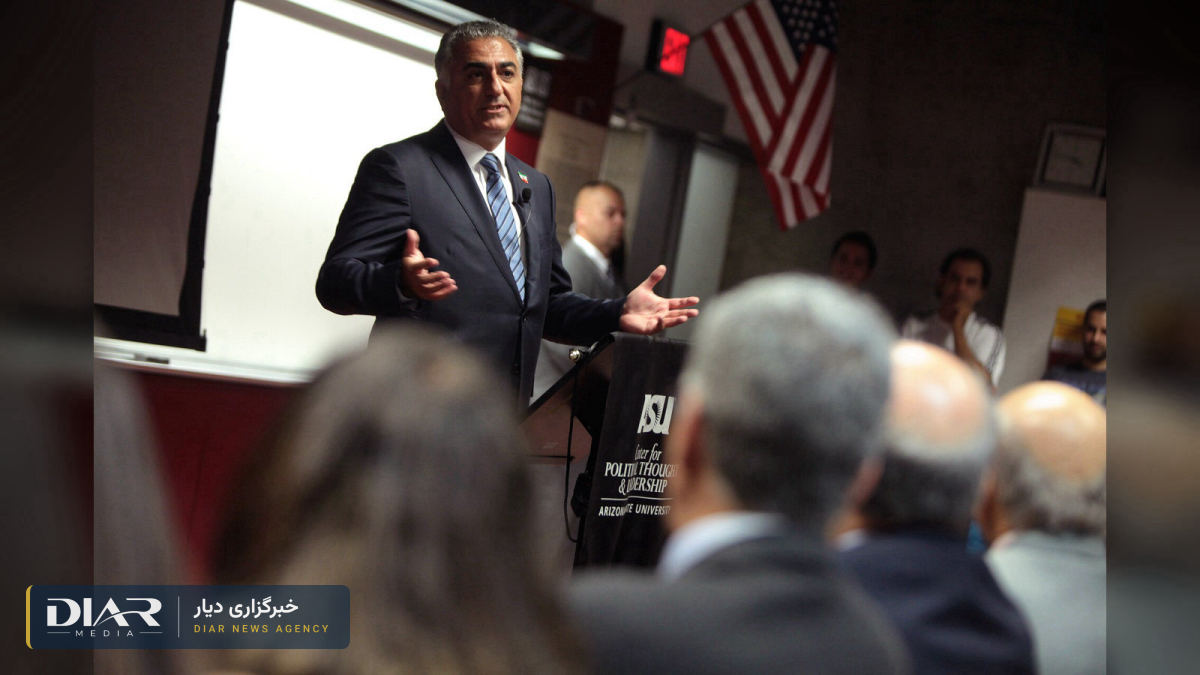
Prince Reza Pahlavi's media office on Wednesday, 14 October 2026, hours after the Islamic Republic's judiciary announced the execution of Alisina Mostafavi, called the execution a "state murder" and a continuation of the Islamic Republic's campaign to spread fear and terror, and declared that those who ordered and carried it out will answer to justice.
The message says that Alisina Mostafavi, a mountaineer and athlete, had been sentenced to death after torture, forced confessions and a show trial. Prince Reza Pahlavi's office ended its message with: "The name of Alisina Mostafavi will not be forgotten."
Transitional Justice Committee's warning to those who order executions
In this message Prince Reza Pahlavi's media office recalled the earlier warning by the Committee for Drafting Iran's Transitional Justice Regulations to those who order and carry out the execution of protesters. The committee had earlier told them: "From those who order to those who carry out the sentences, each and every one of you will be held accountable. Every execution adds to your criminal liability." The same warning said they should not count on these crimes being forgotten, on impunity or on pardon.
On Tuesday, 13 October, when the news that Alisina Mostafavi had been moved to solitary confinement came out, Prince Reza Pahlavi himself, in a message on X, called him a patriotic young man who, after forced confessions under torture, had been sentenced to death in a show trial. He urged his compatriots: "Let us be the voice of political prisoners at risk of execution and use all available capacities to save their lives."
Who Alisina Mostafavi was
Alisina Mostafavi, 38 and from Bam, was an athlete and musician who had climbed several peaks in the Himalayas. He was among those detained in the January uprising and was moved to solitary confinement on Tuesday; his friends and acquaintances had warned on social media of the danger of his imminent execution. His sentence was carried out on Wednesday in Kerman.
The Mizan news agency, affiliated with the judiciary, called him a "monarchist" and claimed that he had a hand in an armed attack in Kerman and that during the January uprising and the recent war he had sent photos and videos to media outside the country. No document from his trial has been published, and most political prisoners sentenced to death in Iran are tried in closed courts.
The execution came a day after Amnesty International called the execution of five protesters of the January uprising in one week a tool for intimidating society.
Prince Reza Pahlavi's office called the execution of Alisina Mostafavi a state murder and said every execution adds to the criminal liability of those who order and carry it out.
Comments
No comments yet. Be the first.