
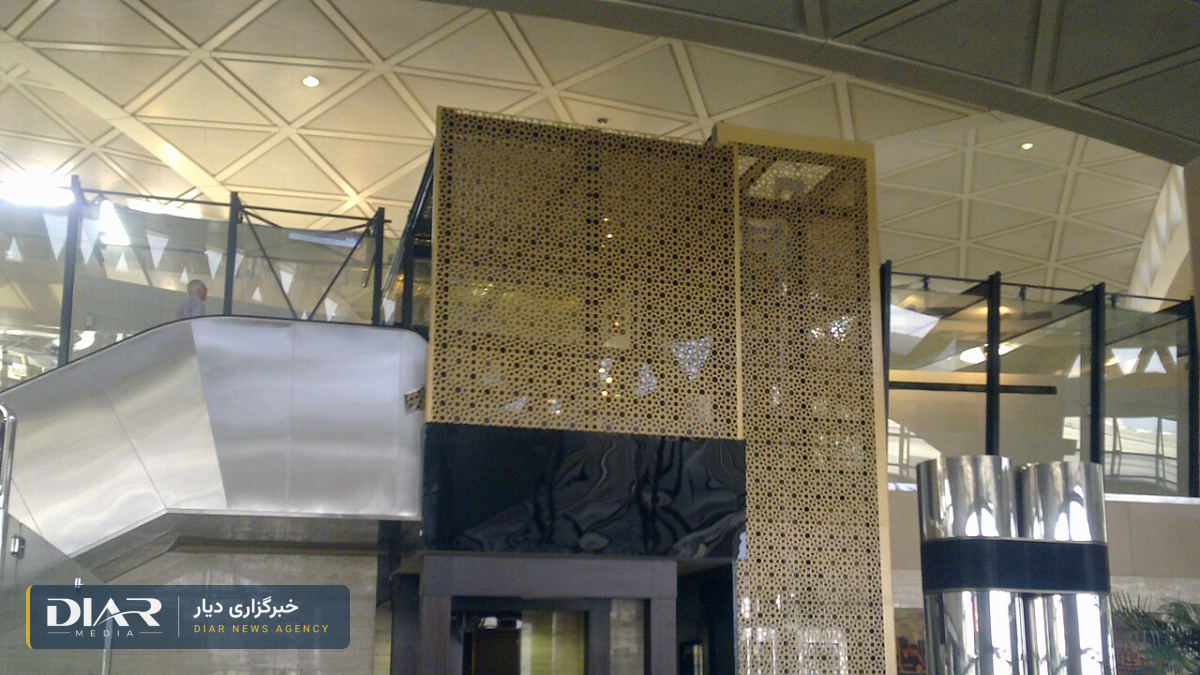
The death toll from two consecutive attacks by the Houthis, the Yemeni armed group backed by the Islamic Republic, on King Khalid International Airport in Riyadh has reached 14. According to Radio Farda, the attack on Saturday, 10 October, left 13 dead and more than 300 wounded, and in a second attack on Sunday, 11 October, on Terminal 4 of the airport, one Pakistani citizen was killed and 11 people were wounded.
Yahya Saree, the Houthis' military spokesman, claimed responsibility for Saturday's attack and claimed that, besides the Dammam airport, the group had also targeted two facilities of the oil company Aramco. The claim of an attack on Aramco has so far not been independently confirmed. Saudi Arabia's General Authority of Civil Aviation, however, confirmed that King Fahd International Airport in Dammam was targeted late on Sunday and that damage assessments and safety inspections have begun. According to Iran International, Aramco shares fell 0.2 percent on the Saudi market.
Travel warnings for Saudi Arabia
Following the attacks, several countries warned their citizens about travel to Saudi Arabia. The US Federal Aviation Administration advised American airlines to exercise caution when flying to or over Saudi Arabia; the advisory is valid until 10 December. The US State Department also asked its citizens to watch for flight cancellations and airspace closures at Saudi airports.
According to Iran International, Britain advised against non-essential travel to Jeddah, Dammam and all Saudi airports except Medina, Australia asked its citizens not to use King Khalid Airport, and South Korea asked its nationals to leave Saudi Arabia. The embassies of Thailand and China also advised their citizens to reduce non-essential travel. Riyadh airport remains closed, and some Dammam flights have been cancelled or delayed.
International reaction to the Houthi attacks
In a joint statement, Turkey, Pakistan, Egypt and Saudi Arabia called the attacks a dangerous escalation of tension that cannot be justified by any pretext, demanded their immediate halt and held the Houthis responsible. Penny Wong, Australia's foreign minister, called the attack on civilians in Saudi Arabia unacceptable. According to Iran International, the UN secretary-general, the European Union, the Arab League, Britain, Italy, the UAE, Canada, Qatar, Japan, India and dozens of other countries also condemned the attacks.
Meanwhile, Saudi air defences intercepted a cruise missile near Riyadh, a drone in the Eastern Province and a ballistic missile heading towards Khamis Mushait. Saudi Arabia has intensified its air strikes on Houthi positions in Yemen, and the Houthis have threatened further attacks if these operations continue.
The role of the Islamic Republic
The Houthis are part of the Islamic Republic's network of proxy forces in the region, and these attacks come amid the US war with the Islamic Republic. Abbas Araghchi, the Islamic Republic's foreign minister, on Sunday, in a phone call with Faisal bin Farhan, offered to help start talks between Saudi Arabia and Yemen. Earlier, a Houthi attack on Dammam airport and Riyadh airport had also killed an American citizen.
Two Houthi attacks on Riyadh airport in two days left 14 dead and more than 300 wounded, and several countries issued warnings about travel to Saudi Arabia.
Comments
No comments yet. Be the first.