
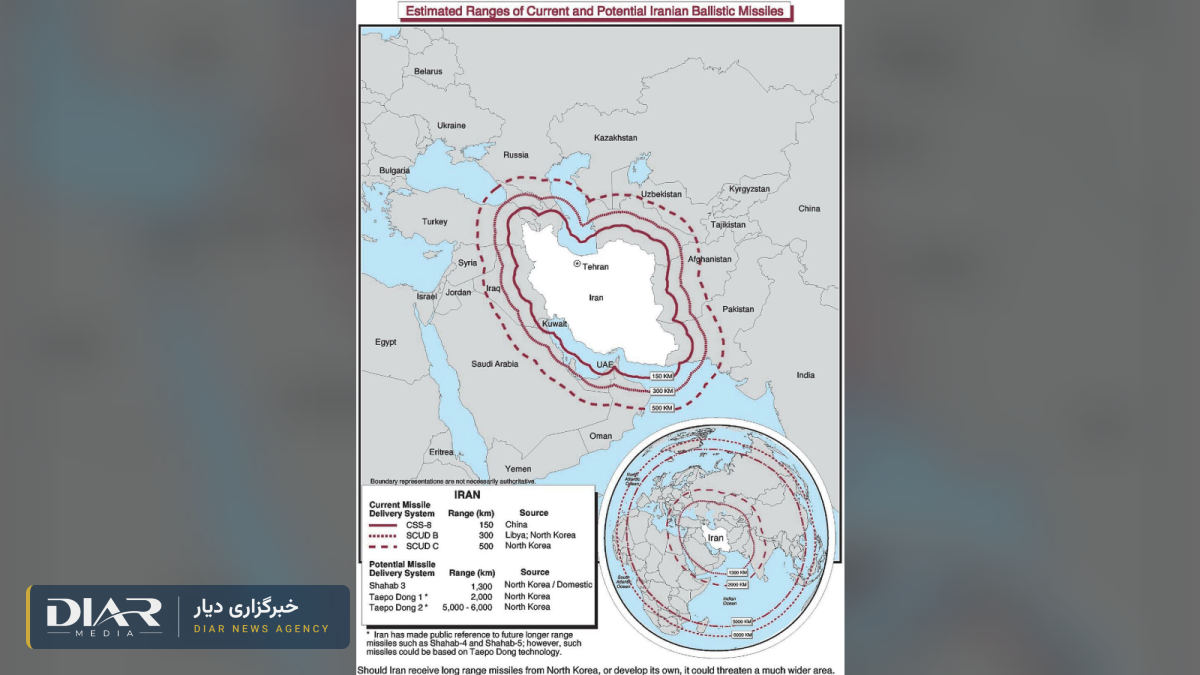
The Islamic Revolutionary Guard Corps (IRGC) tested dozens of ballistic missiles and drones in Iran's skies on Sunday, 11 October 2026, according to Israeli media and channels close to the IRGC itself; at the same time Mohsen Rezaei, secretary of the Islamic Republic's Supreme National Security Council, threatened that if the war resumes, data and artificial intelligence centres in the countries of the region will be targeted.
According to Iran International, Israel's Channel 14 reported that the IRGC, for the first time since the start of the war, had test-fired about 30 ballistic and hypersonic missiles, and had also tested Shahed-136 drones and its air defence capabilities. The "Sabereen News" channel, close to the IRGC, published two videos of the trails of solid-fuel missiles over parts of Iran at noon on Sunday and claimed that the IRGC Aerospace Force had fired more than 30 "Emad" and "Kheibar" missiles. These reports did not name the cities or launch sites.
Mohsen Rezaei's threat against data and AI centres
In a television interview, Mohsen Rezaei said US assets in the region had not previously been on the Islamic Republic's target list, but if the war resumes, the region's cables, data centres and artificial intelligence centres will come under fire; he estimated the value of these facilities at more than 2 trillion dollars. According to JFeed, he threatened that in the next war all data centres and AI facilities located in the Persian Gulf states would be destroyed.
Rezaei also repeated that Washington's response to the Islamic Republic's seven conditions for reopening the Strait of Hormuz is "insufficient", and that until those conditions are met the Strait of Hormuz will remain closed to the United States and there will be no negotiations. He added that the Islamic Republic's forces target five or six small vessels in the Strait of Hormuz every night.
The testing of dozens of missiles in Iran's skies, alongside threats against the region's data centres, came as the US naval blockade continues.
Background: the Islamic Republic's missile capability after months of war
The tests came a few days after Bloomberg reported, citing Western officials, that the Islamic Republic has preserved its ability to build missiles and drones despite months of US and Israeli strikes; the White House rejected that assessment and said the Islamic Republic's weapons production infrastructure had been destroyed.
Donald Trump had earlier announced that the United States would not strike Iran before the midterm elections, but that the naval blockade would continue. US Treasury Secretary Scott Bessent also told Fox News on Sunday that continuing the blockade and economic pressure could force the Islamic Republic to back down within two to four months.
According to Iran International, journalist Reza Talebi has also said that a large part of the Islamic Republic's missile infrastructure has been rebuilt and that the available reports do not support the claim that it was completely destroyed.
Comments
No comments yet. Be the first.