
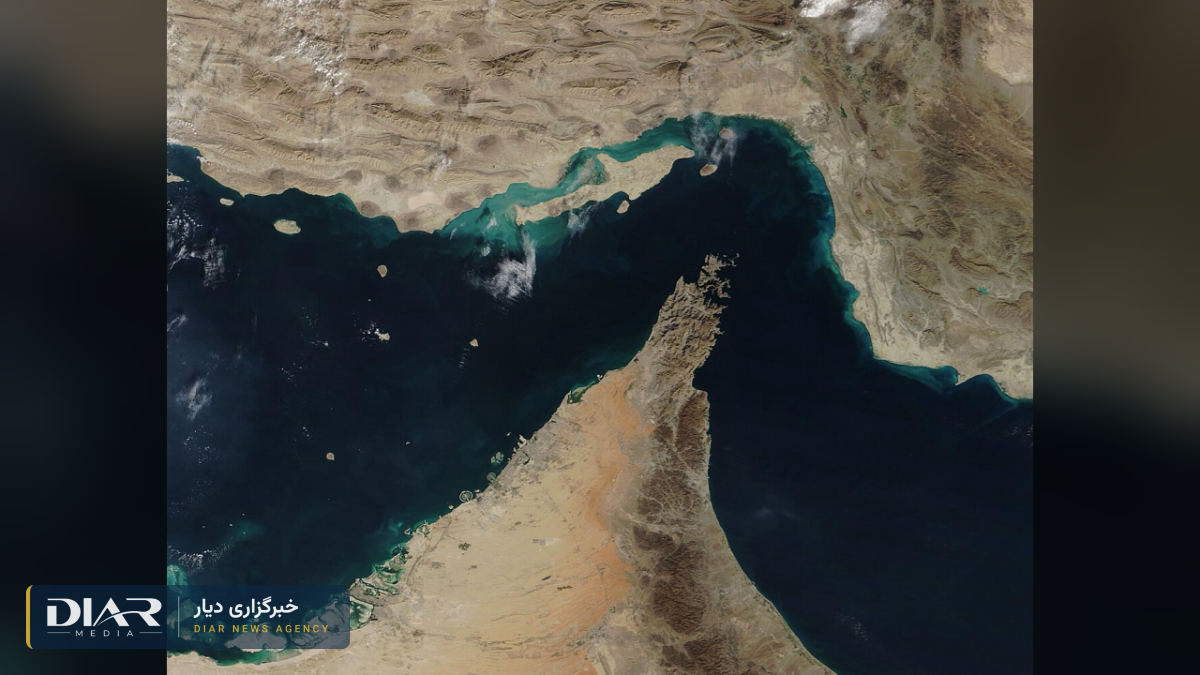
Mohsen Rezaei, secretary of the Islamic Republic's Supreme National Security Council, said on Sunday, 11 October 2026, that the US response to Tehran's seven conditions for reopening the Strait of Hormuz was insufficient. According to Reuters, citing state media, he said Washington must clarify points that Tehran says remain vague.
Reuters has not published details of the content of the US response or the full list of the Islamic Republic's conditions, and as of publication no new official reaction from the White House to Rezaei's remarks had been reported.
The Islamic Republic's conditions for reopening the Strait of Hormuz
In late September, the Islamic Republic presented a seven-day plan to reopen the Strait of Hormuz gradually. According to Al Jazeera, in exchange for reopening the strait the plan asked the United States to release frozen assets, lift oil sanctions and end the naval blockade of Iran's ports. Donald Trump rejected it on 26 September, a few hours after it was presented, saying Tehran's proposal was unacceptable.
Mohammad-Bagher Ghalibaf, the speaker of parliament and the Islamic Republic's chief negotiator, said on 4 October that the strait would remain closed until Tehran's seven conditions were accepted, on the basis of what he called the "Islamabad understanding". He also said that after the Islamic Republic's plan, the United States had sent proposals through an intermediary.
Meanwhile, the main sticking point in the negotiations goes beyond the Strait of Hormuz. US officials, including JD Vance, have made a real reduction in enrichment capacity a condition for ending the war, and Esmaeil Baghaei, spokesman for the Islamic Republic's foreign ministry, has said Washington's priority is the nuclear file while Tehran's priority is reopening the strait.
The naval blockade and the cost of a closed strait
Since the US and Israeli attacks began on 28 February 2026, the Strait of Hormuz has been effectively closed or disrupted for more than seven months; in peacetime about a fifth of the world's oil and gas passes through it. At the same time, the US naval blockade has sharply cut the Islamic Republic's oil exports, and Kpler analysts have warned that the regime's oil export revenue will fall to zero by mid-December.
Trump had earlier said that he would not attack Iran before the midterm elections but that the naval blockade would continue. Rezaei's remarks show the Islamic Republic is still insisting on its conditions, while the cost of the closed strait and the blockade weighs most heavily on Iran's economy and its citizens' livelihoods.
Mohsen Rezaei, who commanded the Revolutionary Guards during the Iran-Iraq war, is accused by Argentina's judiciary of involvement in the 1994 bombing of the AMIA Jewish centre in Buenos Aires.
The Islamic Republic has still not accepted the US response to its seven conditions for reopening the Strait of Hormuz and has asked for further clarification.
Comments
No comments yet. Be the first.